Baby Bowl

Baby Silicone Bowl

Abstract

Silicone baby bowls are special tableware designed for infants aged 6 months and above, with food-grade silicone as the core material, combined with compatible auxiliary components. With core advantages of safety, non-toxicity, softness, shatter resistance and temperature resistance, they are mainstream tableware for infant complementary food feeding, suitable for various scenarios such as daily feeding and outdoor use. This document systematically sorts out the definition, core characteristics, material composition, classification and usage of silicone baby bowls, helping parents fully understand their value and usage specifications, ensuring infant feeding safety and convenience.

Detailed Content

Core Definition and Overall Advantages

Core Definition and Overall Advantages
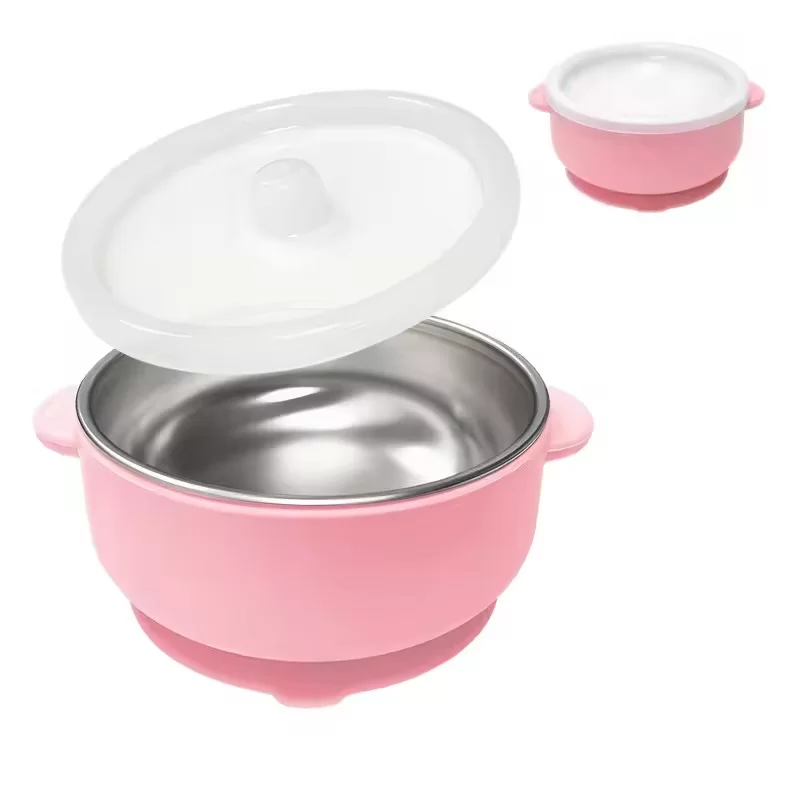
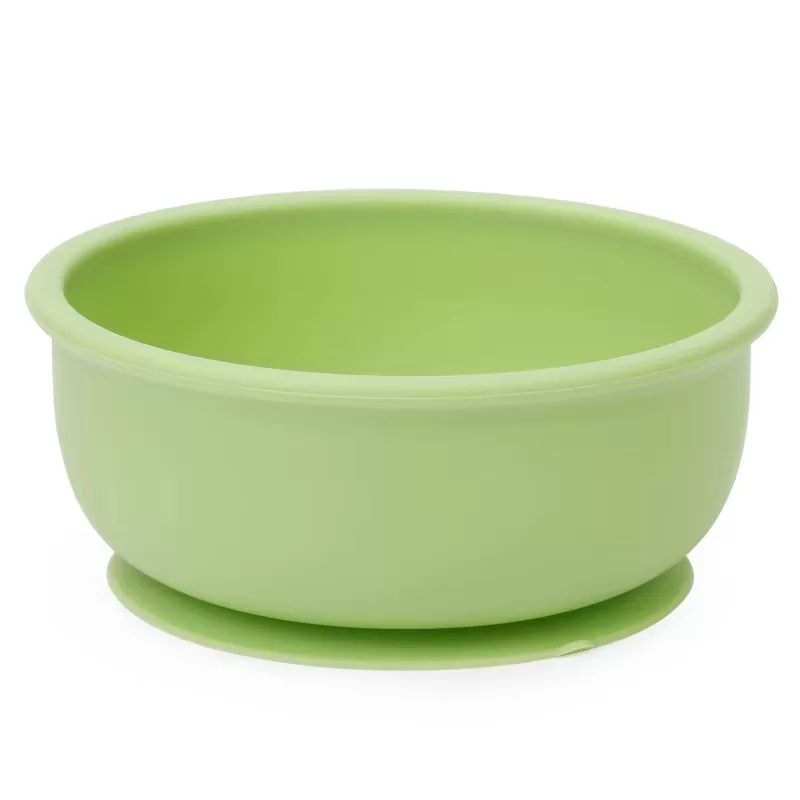
Silicone baby bowls are special tableware made of food-grade silicone as the core material of the bowl body, matched with auxiliary components such as bowl lids and suction cups through precision processing. They are mainly used for holding infant complementary food (puree, porridge, fruit puree, etc.), suitable for babies aged 6 months to 3 years old, with the core design concept of "safe, convenient and adaptive".
Compared with traditional bowls, their overall advantages are prominent: safe and non-toxic (no harmful chemicals such as BPA/PVC), soft and shatter-resistant, temperature-resistant (-40℃ to 220℃), easy to clean, anti-slip and anti-spill, solving the problems of traditional tableware being fragile, toxic and not high-temperature resistant.

Core Materials and Composition

Core Materials and Composition
The quality and safety of silicone baby bowls depend on the core material and auxiliary components, with clear classification and clear functional positioning:
Core Material: Food-grade Silicone
Liquid Food-grade Silicone (LSR): High purity, non-toxic, soft and skin-friendly, -40℃~220℃, suitable for direct contact with food, the preferred material for high-end products.
Solid Food-grade Silicone: Cost-effective, -20℃~200℃, meets daily feeding needs, slightly inferior to LSR in softness, suitable for ordinary families.
Modified Silicone: Added with antibacterial, anti-aging ingredients, suitable for babies with sensitive skin or special needs.
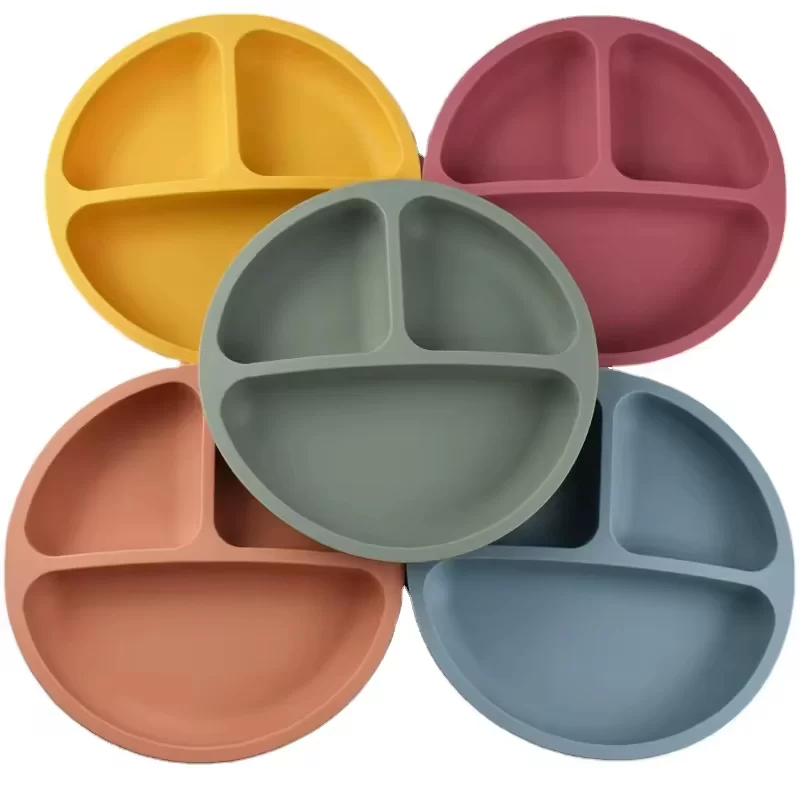
Auxiliary Components: Bowl lid (sealing and freshness preservation), suction cup (anti-slip and anti-spill), detachable partition (separate food), all made of food-grade materials to ensure safety.
Quality Requirements: Pass international certifications (FDA, ISO 10993), non-toxic, no odor, clean production environment, no harmful residues.

Common Application Scenarios

Common Application Scenarios
Silicone baby bowls are mainly used for infant daily feeding, complementary food feeding and outdoor carrying, covering home, catering and other scenarios:
Home Use: Holding complementary food, porridge, fruit puree, water, easy to clean and carry, suitable for daily feeding.
Catering & Food Processing: Matching with baby food processing equipment, ensuring the safety of complementary food and avoiding secondary pollution.
Special Scenarios: Used as experimental tableware for infant feeding, with high safety requirements, suitable for hospitals and family care.

Differences from Traditional Baby Bowls

Differences from Traditional Baby Bowls
vs Ceramic/Glass Bowls: Fragile, easy to break, with safety hazards; silicone bowls are soft, shatter-resistant, non-toxic and high-temperature resistant.
vs Ordinary Plastic Bowls: Low cost but toxic (BPA, PVC), narrow temperature range, easy to age, not suitable for high-temperature disinfection or food contact.
vs Metal Bowls: High hardness, poor flexibility, easy to rust, not suitable for infant use; silicone bowls are soft, non-toxic, suitable for baby grasping and long-term use.

Common Problems & Causes

Common Problems & Causes
Bowl Body Yellowing/Odor: Incomplete cleaning, long-term high-temperature disinfection, bacterial growth.
Poor Anti-slip (Suction Cup Failure): Dust/oil on suction cup, uneven desktop, aging/deformation of suction cup.
Baby Rejection: New bowl odor, inappropriate temperature, unreasonable size/design.
Bowl Body Deformation/Hardening: Over-high temperature disinfection, sun exposure, extrusion/collision.
Bacterial Growth: Incomplete cleaning, humid storage, infrequent replacement.

Usage, Cleaning and Maintenance

Usage, Cleaning and Maintenance
Correct Usage: Select the appropriate size according to the baby's age; control the temperature of complementary food at 40-50℃; supervise when the baby uses it to avoid accidental ingestion.
Cleaning Skills: Clean immediately after use with a soft brush and neutral detergent; deep clean gaps (suction cup, partition) every 3-5 uses; disinfect by boiling (5min) or steaming (10min).
Daily Maintenance: Avoid high temperature (exceeding 220℃), sharp objects and strong chemicals; store in a dry, cool place; replace every 6-12 months (3-6 months for auxiliary components such as suction cups/lids).

Selection Points

Selection Points
Material: Prioritize LSR food-grade silicone, check international certifications (FDA, ISO 10993).
Size: Match the baby's age (small for 6-12 months, medium for 1-2 years old, large for 2-3 years old).
Details: Round bowl mouth (no burrs), detachable components (easy to clean), strong suction cup, good sealing performance.
Brand: Choose regular, reputable brands with complete qualifications and clean production environment.

Summary

Summary
Silicone baby bowls, as essential tableware for infant complementary food feeding, have the advantages of safety, non-toxicity, high temperature resistance, softness and shatter resistance, making up for the shortcomings of traditional tableware. By choosing the right material and size, mastering correct usage and maintenance methods, parents can ensure the safety of infant feeding, improve feeding convenience, and help babies grow up healthily. Meanwhile, they are economical and environmentally friendly, suitable for long-term use in families and related fields.

  • Customization Advantages and Commitments
    Through flexible production processes and highly customized services, GYF provides global customers with adaptable and innovatively designed silicone products. Our customization capabilities extend beyond cross-sectional shapes and colors — we can fully adjust products based on your functional requirements (such as high-temperature resistance, flame retardancy, conductivity, anti-aging, etc.), ensuring every product perfectly fits your application scenarios and brand positioning.
  • GYF: Custom Extruded Silicone Products for High-Quality Solutions
    GYF is committed to providing high-quality customized extruded silicone products for various industries. With precise extrusion technology, efficient production processes, and strict quality control, we help customers enhance product competitiveness and meet stringent industry standards. Whether for medical, automotive, food-grade, consumer electronics, or industrial equipment sectors, we deliver personalized and innovative silicone solutions tailored to your specific needs.
  • Choosing GYF means unlocking greater value — you will gain:
    Long-term consistent production reliability
    Global certification support
    Fast market entry
    Multi-material integrated design for cost reduction and performance improvement
    Reduced defect rates and increased mass production returns
    Capability for mass-producing micro-sized and complex structural components
    Realization of differentiated product competitiveness
  • Choose GYF for Quality Advantages
    ✔ Full-process tracking: Material → Mold → Molding → Inspection → Packaging
    ✔ Automation reduces errors: Independent of manual quality control, suitable for global mass production
    ✔ Complete certifications for export support: FDA, ISO13485, IATF16949, ISO22000, etc.
    ✔ Strict testing ensures reliability: Applicable to high-demand markets such as medical-grade, industrial-grade, and automotive-grade
    ✔ Ultra-high batch consistency: Low defect rate and high efficiency to ensure the stability of customers' supply chains
ODM Silicone & Rubber Product