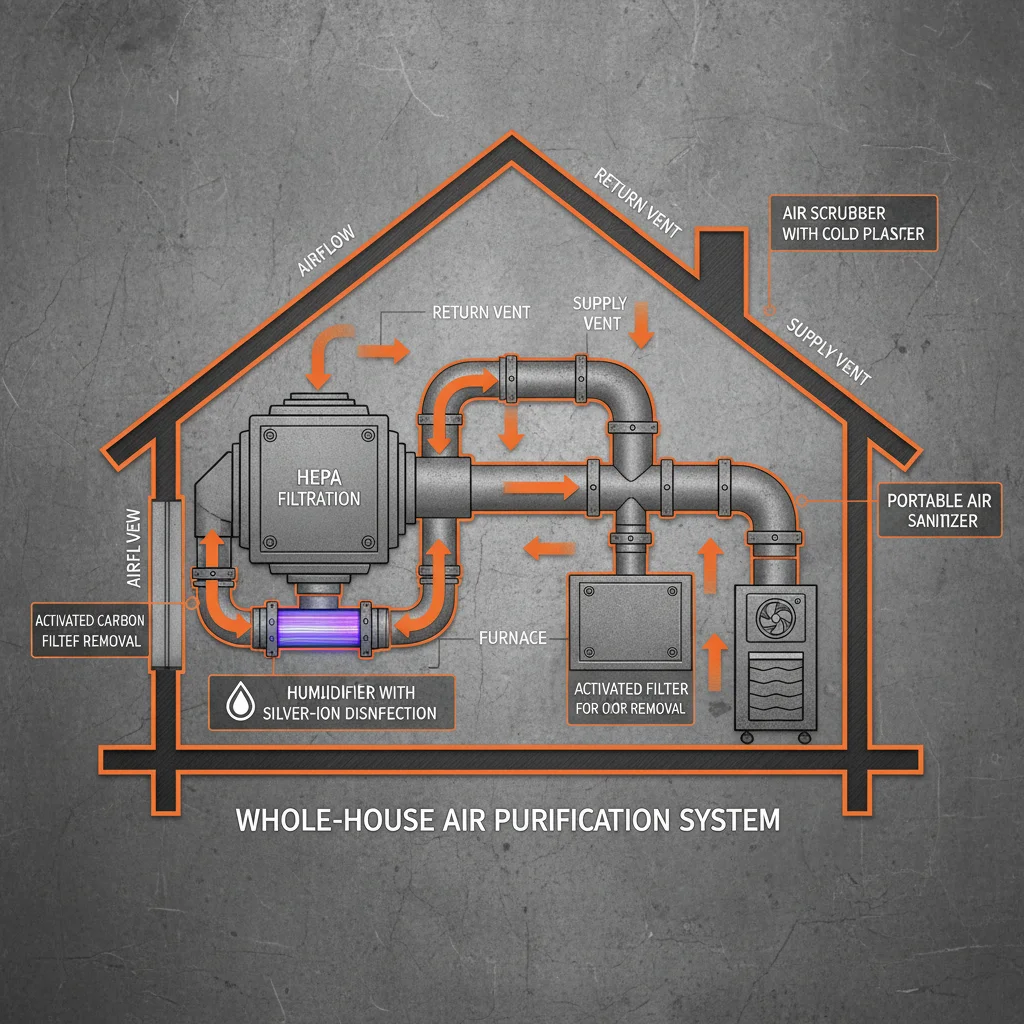
In the evolving landscape of domestic utility and wellness, the concept of a battery powered hepa air purifier has emerged as a critical solution for those seeking portable, high-efficiency filtration. As urban pollution and indoor allergens become more prevalent, the demand for flexible air purification systems that can move with the user has seen a significant global uptick, shifting the paradigm from stationary appliances to mobile health tools.
Understanding the synergy between battery autonomy and High-Efficiency Particulate Air (HEPA) technology is essential for maximizing respiratory health in diverse environments. Whether it is a small office space, a vehicle, or a temporary living arrangement, the ability to maintain air quality without being tethered to a wall outlet represents a major leap in personal environmental control and convenience.
This comprehensive guide explores the technical nuances, industrial applications, and long-term benefits of integrating a battery powered hepa air purifier into modern lifestyle routines. By analyzing the intersection of energy efficiency and filtration precision, we can better appreciate how these devices contribute to a healthier, more sustainable global standard of living.

Global Relevance of Battery Powered HEPA Air Purifiers
The global surge in respiratory awareness, backed by data from organizations like the World Health Organization (WHO), has highlighted the dangers of PM2.5 particles and volatile organic compounds (VOCs). A battery powered hepa air purifier addresses the critical gap in air quality management by providing a localized "clean air bubble" for individuals in high-risk areas, ranging from smog-heavy megacities to dust-prone rural regions.
Moreover, the rise of nomadic work cultures and the increasing frequency of travel have made stationary purifiers insufficient. The integration of high-capacity lithium-ion batteries with medical-grade HEPA filters ensures that protection is no longer confined to the home, but can be deployed in airports, hotels, and shared workspaces, thereby reducing the global burden of airborne illness.
Defining the Battery Powered HEPA Air Purifier Ecosystem
At its core, a battery powered hepa air purifier is a specialized device that utilizes a high-efficiency particulate air filter—capable of trapping 99.97% of particles as small as 0.3 microns—powered by an internal rechargeable energy source. Unlike traditional purifiers, these units are engineered for portability, balancing fan power and battery longevity to maintain a consistent Clean Air Delivery Rate (CADR).
From an industrial perspective, these devices represent a convergence of material science and electrical engineering. The chassis must be lightweight yet durable, and the airflow dynamics must be optimized to prevent excessive battery drain while ensuring the filter is not bypassed by leaking air. This synergy makes them indispensable for humanitarian needs, such as maintaining sterile environments in field hospitals.
In simpler terms, it is a mobile shield against invisible pollutants. By combining the filtration power of a heavy-duty industrial unit with the portability of a consumer electronic, it empowers users to curate their own breathing environment regardless of the external air quality or the availability of electrical infrastructure.
Core Components and Performance Factors
The efficiency of a battery powered hepa air purifier relies heavily on its filtration grade. Medical-grade HEPA filters are essential for capturing microscopic pathogens, while pre-filters are often added to capture larger dust particles, thereby extending the lifespan of the primary HEPA element.
Battery density and power management are equally critical. The battery powered hepa air purifier must utilize advanced circuitry to regulate fan speeds, ensuring that the device can run for several hours on a single charge without compromising the pressure required to push air through a dense filter.
Finally, noise reduction and airflow scalability determine the user experience. An effective battery powered hepa air purifier employs brushless DC motors to minimize acoustic pollution, making it suitable for use in quiet environments like libraries or nurseries without disrupting the peace.
Global Applications and Real-World Use Cases
In post-disaster relief operations, where electricity is scarce and dust from debris is rampant, the battery powered hepa air purifier becomes a life-saving tool. NGOs and emergency responders use these portable units to create safe zones for vulnerable populations, preventing secondary respiratory infections in temporary shelters.
Beyond emergencies, these devices are widely adopted in remote industrial zones, such as mining sites or clean-room facilities in transition. They allow technicians to move between different contamination zones while maintaining a personalized air filtration system, ensuring that operational safety is maintained without requiring massive infrastructure overhauls.
Performance Comparison of Portable Air Purification Methods
Long-Term Value and Sustainability Benefits
The long-term value of investing in a battery powered hepa air purifier extends beyond immediate health benefits. By reducing the reliance on large, energy-consuming central HVAC systems for localized cleaning, these devices offer a more sustainable approach to air management, lowering the overall carbon footprint of a building's energy consumption.
Furthermore, there is a profound emotional and psychological benefit to owning such a device. The sense of security and dignity provided by knowing one can control their breathing environment—especially for those with chronic asthma or allergies—fosters a higher quality of life and trust in personal health technology.
Future Trends in Portable Air Purification
The next generation of battery powered hepa air purifier technology is moving toward "smart" integration. We can expect to see AI-driven sensors that automatically adjust filtration speeds based on real-time air quality indices (AQI), optimizing battery life and ensuring maximum efficiency only when pollutants are detected.
Material science is also evolving, with the introduction of graphene-enhanced filters that offer lower airflow resistance. This will allow battery powered hepa air purifier units to become even smaller and lighter while maintaining, or even increasing, their CADR ratings.
Additionally, the shift toward green energy will likely see these devices incorporating solar-charging panels or kinetic energy harvesting, potentially eliminating the need for traditional electrical charging and making them truly autonomous for outdoor exploration and extreme remote use.
Overcoming Technical Challenges in Filtration
One of the primary limitations in current portable filtration is the "pressure drop" caused by high-density HEPA media. This requires more power from the motor, which in turn drains the battery faster. Engineers are solving this by utilizing pleated filter designs that increase the surface area, allowing for higher airflow with less resistance.
Another challenge is the environmental impact of disposable filters. The industry is transitioning toward washable, permanent HEPA-equivalent materials or biodegradable filter frames to ensure that the battery powered hepa air purifier remains an eco-friendly choice from production to disposal.
Lastly, battery degradation over time remains a concern. The implementation of advanced Battery Management Systems (BMS) and the adoption of solid-state batteries will likely provide the stability and longevity needed for these devices to remain operational for years without requiring expensive battery replacements.
Technical Analysis of Portable Filtration Efficiency
| Filter Grade |
Battery Impact |
Airflow Resistance |
Purification Score |
| H11 HEPA |
Low |
Low |
7/10 |
| H13 HEPA |
Medium |
Medium |
9/10 |
| H14 HEPA |
High |
High |
10/10 |
| Activated Carbon |
Low |
Low |
6/10 (Gas) |
| ULPA Filter |
Very High |
Very High |
10+/10 |
| Pre-Filter Mesh |
Negligible |
Negligible |
4/10 |
FAQS
Depending on the fan speed setting and battery capacity, most high-quality battery powered HEPA air purifiers last between 8 to 24 hours on a single charge. Using "Eco" or "Low" modes significantly extends this duration, while "Turbo" mode may reduce it to 3-5 hours. For optimal longevity, it is recommended to use the device in targeted zones rather than attempting to clear an entire large room.
Yes, provided it uses a certified H13 or H14 HEPA filter. These filters are designed to capture 99.97% of particles down to 0.3 microns, including bacteria and many viral droplets. The battery power does not affect the filtration capability itself, only the volume of air (CADR) that can be processed per hour. Therefore, the filtration quality remains as high as that of a plug-in unit.
Absolutely. In fact, vehicles are one of the most effective environments for a battery powered HEPA air purifier because the small cubic volume of the cabin allows the device to cycle the air quickly. They are particularly useful for removing exhaust fumes, pollen, and odors that the car's standard cabin filter might miss, providing a much healthier breathing space for passengers.
Replacement frequency depends on the environment. In highly polluted areas, filters may need changing every 3 months. In cleaner indoor settings, they can last 6 to 12 months. Many modern units include a filter life indicator light that alerts the user when the pressure drop becomes too high, signaling that the filter is clogged and needs replacement to maintain efficiency.
Generally, yes. Most reputable brands incorporate overheat protection and automatic shut-off features. However, it is advised to place the unit on a hard, flat surface rather than on bedding or carpets to ensure that the intake vents remain unobstructed, preventing the motor from overheating and ensuring a steady flow of clean air.
Most modern portable purifiers use USB-C charging, making them compatible with high-capacity power banks and portable solar panels. This makes them ideal for camping or emergency situations. To ensure safety, always check that the power source provides the correct voltage and wattage required by the device's internal battery management system.
Conclusion
The transition toward portable air quality management, epitomized by the battery powered hepa air purifier, represents a critical evolution in personal wellness. By merging high-efficiency filtration with energy autonomy, these devices provide an essential layer of protection against the invisible threats of urban and industrial pollution, ensuring that health is not compromised by geography or infrastructure.
Looking forward, the integration of smarter sensors and sustainable materials will only enhance the efficacy and ecological profile of these tools. As we prioritize respiratory health in an increasingly unpredictable global environment, investing in portable, high-grade filtration is not just a luxury—it is a strategic decision for a safer, healthier future. Visit our website: www.gyfsilicone.com