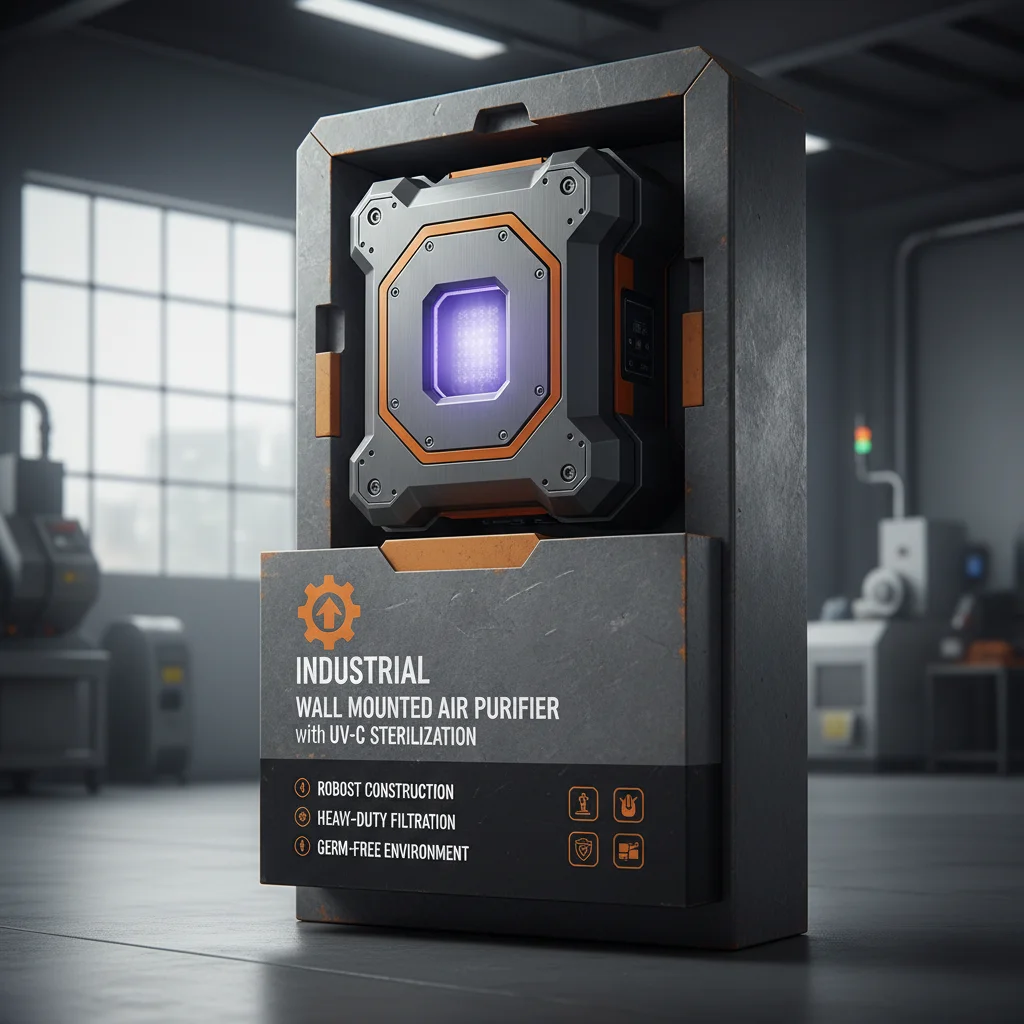
Maintaining pristine air quality in industrial and medical environments is no longer a luxury but a critical operational requirement. A wall mounted hepa filter provides a sophisticated solution for space-constrained areas, ensuring that airborne particulates, allergens, and pathogens are efficiently captured without occupying valuable floor real estate.
Across various sectors—from pharmaceutical labs to high-precision rubber manufacturing—the integration of wall-mounted filtration systems allows for a strategic approach to laminar flow and contamination control. By elevating the filtration point, these systems can be tailored to create "clean zones" exactly where sensitive processes occur, reducing the risk of product spoilage or environmental contamination.
Understanding the technical nuances of the wall mounted hepa filter is essential for facility managers aiming to meet ISO cleanroom standards. From the choice of housing materials to the efficiency of the HEPA media, every component plays a role in safeguarding human health and ensuring the integrity of high-value industrial outputs.

Global Relevance of Wall Mounted HEPA Filtration
In the current global industrial landscape, the demand for sterile environments has surged, driven by stricter ISO standards and the rise of advanced biotechnology. The wall mounted hepa filter has emerged as a pivotal tool in this transition, allowing facilities to implement high-efficiency particulate air filtration in regions where traditional ceiling-mounted systems are structurally impossible.
Statistically, the prevalence of airborne contaminants in manufacturing zones can lead to a 15-20% increase in product defect rates if not properly managed. By utilizing wall-mounted solutions, industries can create targeted airflow patterns that sweep contaminants away from the work surface, directly addressing the challenge of localized pollution in dense factory layouts.
Defining the Wall Mounted HEPA Filter Mechanism
At its core, a wall mounted hepa filter is an air purification unit designed to be securely anchored to vertical surfaces, utilizing High-Efficiency Particulate Air (HEPA) media to trap 99.97% of particles as small as 0.3 microns. Unlike portable purifiers, these are integrated into the building's HVAC or stand-alone dedicated ventilation circuits to provide a constant stream of sterile air.
This configuration is particularly vital for modern humanitarian and medical needs, such as temporary clinics or modular laboratory setups. The ability to mount the filtration system on a wall ensures that the floor remains clear for medical equipment and personnel movement, blending high-level science with ergonomic facility design.
From a technical perspective, these filters rely on the principles of interception, impaction, and diffusion. By forcing air through a dense mat of randomly arranged fibers, the wall mounted hepa filter ensures that microscopic pollutants are captured, preventing them from recirculating into the breathing zone of the operator.
Core Components for Industrial Durability
The effectiveness of a wall mounted hepa filter begins with its housing. Industrial-grade chassis are typically constructed from powder-coated galvanized steel or stainless steel to resist corrosion and ensure a leak-proof seal, which is critical to preventing "bypass" air from entering the clean zone.
Central to the performance is the filter media itself. A high-quality wall mounted hepa filter utilizes borosilicate glass fibers, which are engineered to maintain structural integrity under high pressure drops while maximizing the surface area for particle capture.
Furthermore, the integration of pre-filters is a key factor in longevity. By capturing larger dust particles before they reach the primary HEPA stage, these systems significantly extend the service life of the expensive main filter, reducing maintenance costs and downtime in critical production environments.
Performance Metrics and Scalability
When evaluating the scalability of air purification, the "Clean Air Delivery Rate" (CADR) and the pressure drop across the media are the most critical metrics. A wall mounted hepa filter must balance high airflow with the resistance created by the dense filter mesh to ensure energy efficiency without compromising air purity.
For facilities expanding their operations, modular wall-mounted units offer a distinct advantage over centralized systems. They can be added incrementally to specific workstations, allowing for localized "micro-environments" that can be scaled up as production volume increases.
Efficiency Analysis of Wall Mounted HEPA Filter Configurations
Global Applications in High-Precision Sectors
In the rubber and plastics industry, particularly during the curing or molding of precision silicone components, the wall mounted hepa filter is indispensable. It prevents airborne dust from embedding into the tacky surfaces of uncured rubber, ensuring the final product meets aerospace or medical-grade purity standards.
Beyond manufacturing, these systems are widely deployed in remote industrial zones and post-disaster relief hospitals. In these contexts, where ceiling infrastructure is absent, wall-mounted units provide the only viable means of creating a sterile operating field or a contamination-free pharmacy area, directly impacting patient survival rates.
Long-Term Value and Sustainable Benefits
The long-term value of investing in a high-quality wall mounted hepa filter extends beyond mere compliance. By drastically reducing the incidence of particulate contamination, companies experience a lower rate of product recalls and waste, which directly translates to higher profit margins and a smaller environmental footprint.
From a social and emotional perspective, providing a clean air environment demonstrates a commitment to worker safety and dignity. Employees working in rubber processing or chemical synthesis feel a greater sense of trust in their employer when the air they breathe is visibly and measurably purified.
Furthermore, the sustainability of these systems is enhanced through the use of recyclable aluminum frames and low-energy EC motors. This shift toward "green" filtration ensures that the quest for purity does not come at the expense of the planet's health, aligning industrial growth with global ESG goals.
Future Innovations in Air Purification Technology
The future of the wall mounted hepa filter is leaning heavily toward the digital transformation of air quality management. Smart sensors integrated into the filter housing can now provide real-time data on pressure drops and particle counts, allowing for "predictive maintenance" rather than scheduled replacements.
We are also seeing the emergence of nano-fiber coatings and antimicrobial layers that don't just trap particles but actively neutralize biological threats. These innovations will make wall-mounted systems even more critical in high-risk environments like virology labs or advanced semiconductor cleanrooms.
Automation will further refine the process, with AI-driven fans that adjust their speed based on the current pollutant load in the room. This will optimize energy consumption while ensuring that the wall mounted hepa filter always maintains the required air change rate for its specific environment.
Comparative Analysis of Wall Mounted HEPA Filter Specifications
| Filter Grade |
Efficiency (%) |
Typical Lifespan |
Primary Use Case |
| H13 HEPA |
99.95% |
12-18 Months |
General Lab/Industrial |
| H14 HEPA |
99.995% |
10-15 Months |
Pharmaceutical Grade |
| U15 ULPA |
99.9995% |
8-12 Months |
Semiconductor Fab |
| Medical Grade |
99.97% |
12 Months |
Hospital Isolation |
| Industrial Basic |
99.0% |
18-24 Months |
Warehousing/Storage |
| Custom Silicone-Safe |
99.99% |
14 Months |
Rubber Molding Zones |
FAQS
Wall-mounted units are typically integrated into the building's ventilation or a dedicated high-pressure blower system, allowing for a much higher volume of air to be processed (CADR). Unlike portable units, they are fixed in a way that creates a controlled air curtain or laminar flow, which is essential for preventing contamination in industrial cleanrooms.
Replacement frequency depends on the pollutant load and the use of pre-filters. Typically, pre-filters are changed every 3 months, while the main HEPA media lasts between 12 to 18 months. We recommend monitoring the pressure gauge; once the pressure drop reaches a specific threshold, replacement is necessary to maintain airflow.
Yes, though they are most common in labs, they are excellent for offices with high allergy risks or electronic equipment that attracts dust. Installation requires a wall anchor and usually a connection to an exhaust or intake duct to ensure the air is being pushed through the filter efficiently.
Depending on the model, some systems use a surface-mount bracket that requires minimal drilling. However, high-capacity systems that integrate with HVAC ducting will require a cutout in the wall. Professional installation is recommended to ensure an airtight seal between the wall and the unit housing.
Modern units utilize Energy-Efficient (EC) motors that significantly reduce power consumption. Because they are targeted and localized, they often use less energy than running a full-building HVAC filtration system at maximum capacity to achieve the same local air purity.
HEPA filters trap 99.97% of particles down to 0.3 microns. ULPA (Ultra-Low Penetration Air) filters are more stringent, trapping 99.999% of particles down to 0.12 microns. ULPA is typically reserved for semiconductor manufacturing or high-level virology labs due to the higher pressure drop and cost.
Conclusion
The implementation of a wall mounted hepa filter represents a strategic investment in both operational quality and environmental safety. By combining high-efficiency particulate capture with a space-saving design, these systems resolve the conflict between the need for sterile air and the limitations of physical floor space. From reducing product defects in rubber manufacturing to saving lives in emergency medical tents, the versatility and reliability of wall-mounted filtration are undeniable.
Looking ahead, the integration of smart monitoring and sustainable materials will further elevate the role of air purification in the global industrial chain. We encourage facility managers and engineers to assess their current air quality bottlenecks and consider the targeted efficiency that a wall-mounted solution provides. For high-precision components and reliable air solutions, visit our website: www.gyfsilicone.com