The modern interior environment is increasingly under threat from microscopic pollutants, volatile organic compounds (VOCs), and airborne pathogens, making the implementation of advanced filtration systems a priority for health-conscious homeowners and facility managers. A wall hanging air purifier offers a strategic solution by utilizing vertical space to optimize airflow and eliminate floor-level obstructions, ensuring a cleaner breathing zone without compromising room aesthetics.
Globally, the shift toward sustainable urban living has intensified the demand for space-saving appliances that do not sacrifice performance for size. By integrating high-efficiency particulate air (HEPA) technology and activated carbon filters into a wall-mounted chassis, the wall hanging air purifier addresses the critical need for continuous air scrubbing in high-traffic areas, bedrooms, and clinical settings.
Understanding the technical nuances of these systems—from the aerodynamics of wall-to-room circulation to the materials used in the housing—is essential for maximizing the longevity and efficacy of the device. This guide explores the engineering, application, and future trajectory of the wall hanging air purifier, providing a comprehensive roadmap for those seeking to enhance indoor air quality through innovative design.

Global Impact and Industry Context of Wall Hanging Purifiers
The global rise in urban air pollution, compounded by findings from the World Health Organization (WHO) regarding indoor air quality, has pushed the HVAC industry toward more specialized solutions. Traditional floor units often suffer from "dead zones" where air remains stagnant; however, a wall hanging air purifier leverages the natural convection currents of a room, drawing contaminated air from higher elevations where heat and certain pollutants accumulate.
From an industrial perspective, the adoption of wall-mounted systems aligns with the ISO standards for cleanroom environments and healthy building certifications. By removing the device from the floor, companies and homeowners reduce the risk of mechanical damage and facilitate easier maintenance, creating a seamless integration between architectural design and environmental health.
Defining the Wall Hanging Air Purifier Mechanism
In simple terms, a wall hanging air purifier is an air filtration device designed to be permanently or semi-permanently mounted to a vertical surface. Unlike portable units, these devices are engineered to optimize the "throw" of purified air across a room, ensuring that the Clean Air Delivery Rate (CADR) is distributed evenly throughout the living or working space.
This design is not merely about aesthetics; it is a response to the humanitarian need for breathable air in overcrowded urban apartments and compact medical clinics. By elevating the intake and exhaust, these systems prevent the concentration of pollutants at the breathing level of infants and pets, while simultaneously freeing up precious square footage in dense metropolitan areas.
Technically, the mechanism involves a powerful centrifugal fan and a multi-stage filtration array. The wall-mounted orientation allows for a larger surface area for the filters relative to the device's footprint, enabling a higher volume of air to be processed per hour without the noise levels typically associated with small, high-pressure floor fans.
Core Components for Maximum Air Filtration
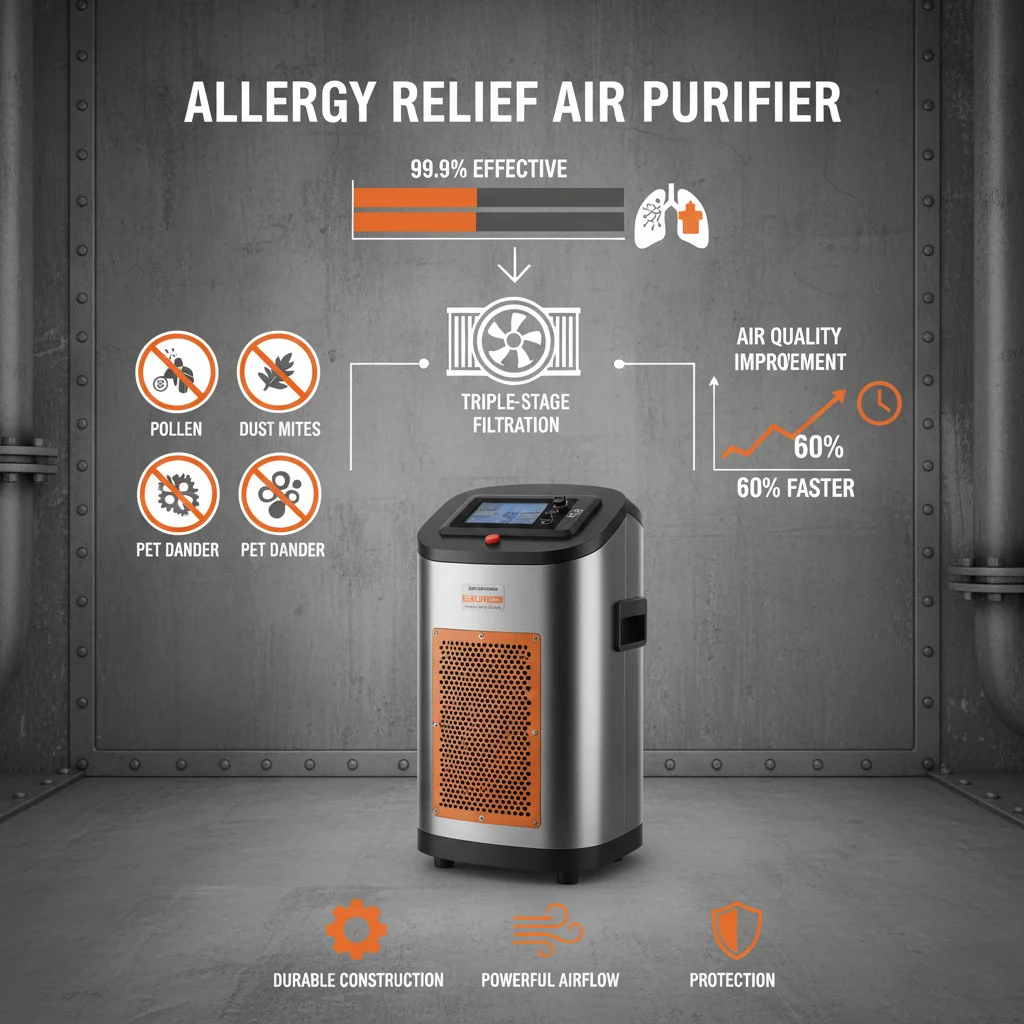
The efficacy of a wall hanging air purifier depends heavily on its filter stack. Most professional-grade units employ a three-tier system: a pre-filter for large dust particles, a HEPA filter for microscopic allergens, and an activated carbon layer for chemical odors and gases.
Durability is another critical factor; the chassis of a high-quality wall hanging air purifier is often constructed from reinforced ABS or medical-grade silicone-coated plastics to prevent degradation from cleaning agents and to ensure the unit remains vibration-free when mounted.
Finally, scalability in control systems allows these purifiers to be integrated into smart home ecosystems. Modern wall hanging air purifier models now include laser particle sensors that automatically adjust fan speeds based on real-time PM2.5 readings, ensuring energy efficiency.
Performance Metrics and Efficiency Analysis
When evaluating the efficiency of air scrubbing systems, the primary metric is the Air Changes per Hour (ACH). A wall-mounted configuration typically enhances this metric by reducing the obstruction of furniture, allowing the purified air to travel further and more consistently across the room's volume.
Comparing various filtration methods reveals that wall-mounted units often outperform portable ones in terms of vertical air distribution and energy consumption per cubic meter of air cleaned, particularly in rooms with high ceilings.
Comparative Efficiency of Wall Hanging Air Purifier Variants
Global Applications and Strategic Use Cases
In clinical environments, such as dental offices or small clinics, the wall hanging air purifier is indispensable. By mounting units near the ceiling, clinics can create a downward flow of sterile air, reducing the risk of cross-contamination between patients and practitioners.
Furthermore, in remote industrial zones or post-disaster relief shelters, these devices provide a rapid-deployment method for air quality control. Because they do not require floor space, they can be installed in cramped modular housing units to remove mold spores and industrial dust, ensuring the health and dignity of inhabitants.
Long-Term Value and Sustainability Benefits
The long-term value of investing in a wall-mounted system lies in its operational reliability and sustainability. By reducing the frequency of accidental impact—common with floor units—the lifecycle of the internal motor is significantly extended, lowering the total cost of ownership over a ten-year period.
From an emotional standpoint, the presence of a wall hanging air purifier provides a sense of safety and trust, especially for parents of children with asthma or allergies. The visual confirmation of a working, elevated system reassures users that the air they breathe is being actively managed.
Additionally, modern units are moving toward biodegradable filter frames and energy-efficient brushless DC motors. This transition reduces the carbon footprint of the device and ensures that the pursuit of clean air does not come at the expense of the global environment.
Future Innovations in Air Purification Technology
The future of the wall hanging air purifier is inextricably linked to the digital transformation of the home. We are seeing a shift toward "AI-driven atmospheric management," where purifiers communicate with HVAC systems to create a synchronized air-cleaning network throughout a building.
Material science is also playing a pivotal role. The integration of photocatalytic oxidation (PCO) and graphene-based filters promises to eliminate odors and pathogens more effectively than traditional carbon, while requiring less frequent replacements.
As green energy policies tighten, we expect to see solar-integrated wall purifiers that utilize thin-film photovoltaics on their exterior casings, making them entirely energy-independent in sunny climates.
Core Analysis of Future Purification Technologies
| Technology Type |
Filtration Efficiency |
Maintenance Cycle |
Energy Impact |
| Traditional HEPA |
High (99.97%) |
6-12 Months |
Moderate |
| Graphene Filter |
Ultra-High |
18-24 Months |
Low |
| Photocatalytic (PCO) |
High (Gas-focused) |
Long-term/Permanent |
Moderate |
| Electrostatic Precipitator |
Medium-High |
Washable/Reusable |
Low |
| UV-C Integration |
Pathogen-Specific |
Annual Bulb Change |
Moderate |
| AI-Hybrid System |
Dynamic/Optimal |
Predictive |
Very Low |
FAQS
Wall-mounted units utilize vertical air distribution, which prevents the "dead air" pockets often found at the top of rooms. By exhausting purified air from a height, they create a more comprehensive circulation pattern that pushes pollutants toward the floor-level intake or cycles them through the filter more efficiently than a floor unit that may be blocked by furniture.
Most modern units are designed with a "bracket-and-slide" system. Once the mounting bracket is secured to the wall with standard screws, the purifier simply slides into place. However, since these devices require power, professional installation is recommended if a dedicated electrical outlet is not already available at the desired height.
Yes, provided the unit includes an activated carbon filter. While HEPA filters capture particles (dust, pollen), the carbon layer chemically bonds with volatile organic compounds (VOCs) and odor molecules. Wall-mounted units are particularly effective in kitchens as they can be placed near the ceiling where warm, odor-laden air naturally rises.
This depends on the environment. In a standard home, pre-filters may need cleaning every 2-3 months, and HEPA filters replaced every 6-12 months. In industrial or high-pollution areas, these cycles may be shorter. Many smart wall hanging air purifiers now include filter-life indicators to notify you exactly when a replacement is needed.
Generally, no. Because they are mounted on a wall, they can use larger, slower-spinning fans to move the same volume of air as a small, high-speed portable fan. This often results in a lower-frequency sound that is less intrusive, though high-quality vibration-dampening mounts are essential to prevent the wall from acting as a soundboard.
They are actually safer and more effective for nurseries. By being wall-mounted, they are completely out of reach of curious children and pets, eliminating the risk of tipping or accidental tampering. Furthermore, they provide a consistent stream of clean air at a height that efficiently clears the room's atmosphere.
Conclusion
The transition toward a wall hanging air purifier represents a sophisticated evolution in indoor environmental control. By combining space-saving architecture with high-efficiency filtration and smart automation, these systems solve the dual challenge of urban congestion and deteriorating air quality. From the clinical precision required in healthcare settings to the safety needs of a modern nursery, the vertical approach to air purification ensures a healthier, more breathable atmosphere without compromising the utility of our living spaces.
Looking forward, as material science introduces graphene filters and AI optimizes energy consumption, the wall-mounted purifier will become a standard component of "healthy building" design. We encourage facility managers and homeowners to evaluate their current airflow patterns and consider the strategic advantages of elevated filtration. To explore the highest quality components and customized solutions for air purification systems, visit our website: www.gyfsilicone.com