

October 21, 2026
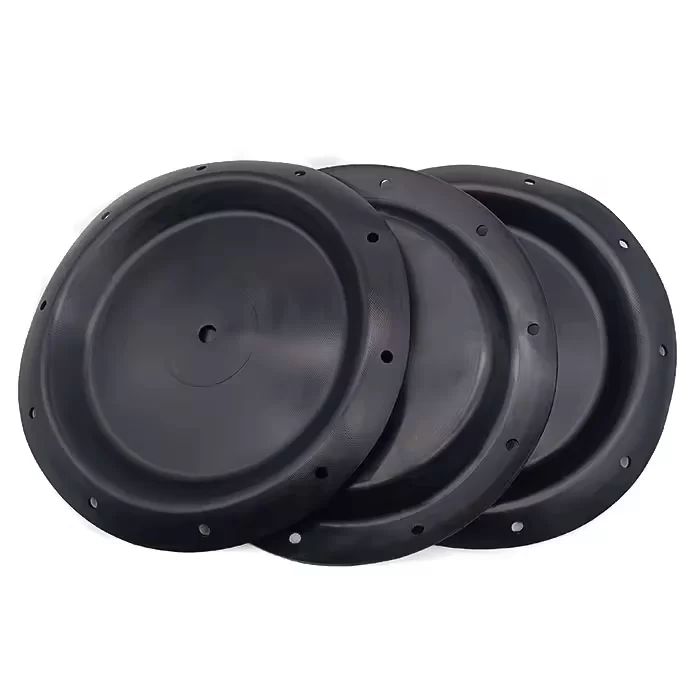
Acquiring fluid handling hardware from factories abroad often tests supply chain resilience. Importers face friction when factory documentation lacks alignment with destination requirements. Target market access for industrial pneumatic diaphragm pump components typically requires alignment with regional industrial safety frameworks rather than single-component mandatory import licenses.
Procurement strategies must pivot away from chasing unverified certificates toward establishing systematic verification routines.
Procurement evaluation for Premium Industrial Grade Silicone Rubber diaphragms must focus on available general industrial compliance standards and request corresponding documentation from suppliers. Supply chain teams establish these baseline checks to mitigate import delays and ensure operational readiness.
Pneumatic elements utilized in fluid transfer systems require validation through regional operational protocols rather than restricted border entry certificates. Custom clearance procedures for fluid control parts depend heavily on verifying broad industrial suitability rather than presenting restrictive border permits at the port of entry.
Target market access relies on overarching compliance benchmarks. Importers navigating international supply chains frequently misinterpret customs demands by searching for non-existent individual regulatory approvals.
Procurement teams avoid common compliance misconceptions during initial supplier screening by focusing on verified factory capabilities and established material parameters. Evaluating manufacturing partners requires examining their ability to furnish standardized compliance documentation rather than assuming specific destination-specific border permits exist for each individual sub-component.
Manufacturing sectors across different jurisdictions enforce distinct operational safety thresholds for fluid handling equipment. Supply chain managers must assess whether factory production lines adhere to recognized Industry Compliance Standard protocols before finalizing purchase agreements.
Documentation requests should target broad operational suitability rather than isolated border clearance certificates. Importing entities establish verification protocols to evaluate factory production consistency prior to dispatch.
Import workflows proceed smoothly when purchasing agents prioritize broad operational guidelines over nonexistent regulatory documents. Supply chain audits focus on verifying production parameters against established industrial baselines.
Procurement evaluation centers on verifying available factory compliance credentials rather than assuming universally mandated border permits exist for each sub-component.
Suppliers in manufacturing sectors must furnish transparent documentation confirming that material formulations meet baseline benchmarks for fluid handling equipment. Downstream distributors evaluate potential factory partners by examining their readiness to provide standardized test records directly upon request.
| material | application | industry | certification |
|---|---|---|---|
| Premium Industrial Grade Silicone Rubber | chemical processing | manufacturing sectors | Industry Compliance Standard |
| Premium Industrial Grade Silicone Rubber | food production | manufacturing sectors | Industry Compliance Standard |
| Premium Industrial Grade Silicone Rubber | general industrial applications | manufacturing sectors | Industry Compliance Standard |
Sourcing engineers should immediately review existing supplier documentation checklists to ensure all factory-issued files align with the specific industrial safety frameworks required for global distribution.
Silicone rubber diaphragm applications in chemical processing and food production require systematic review of material grades against established industry norms rather than unverified regulatory claims. Operating conditions in these environments dictate how elastomers endure aggressive media and temperature variations during fluid transfer cycles. Procurement teams assess long-term operational resilience by matching baseline material properties with facility-specific exposure thresholds. Material selection protocols depend directly on factory-issued technical documentation rather than unsupported marketing assertions.
Chemical processing installations expose flexible pump elements to corrosive fluids, organic solvents, and reactive reagents. Elastomer degradation typically manifests through swelling, hardening, or surface cracking when exposed to incompatible media. Sourcing engineers review factory specifications to verify that chemical compatibility data covers the intended fluid stream. To determine precise chemical resistance thresholds under specific operating pressures and temperatures, contact the supplier to obtain the files.
Food production facilities demand non-toxic, odorless, and easily sanitized fluid handling components to prevent microbial contamination. Equipment specifiers evaluate elastomer formulations to ensure they inhibit bacterial growth and withstand frequent clean-in-place procedures. Factory partners must furnish complete manufacturing records proving that production batches adhere to general industrial compliance standards. Procurement verification ensures that fluid contact surfaces maintain structural integrity throughout repeated thermal and mechanical stress cycles.
General industrial benchmarks dictate how factory output aligns with operational requirements in chemical processing and food production environments. Operational parameters depend heavily on operating temperature ranges and specific fluid compatibility variables determined by destination requirements.
Factory-provided technical sheets require methodical cross-referencing against accepted manufacturing expectations. Procurement teams evaluate material durability through structured performance comparisons rather than relying on unverified claims. Variations in batch density and tensile strength depend entirely on exact processing conditions.
Discrepancies often emerge when comparing initial supplier specifications against established factory performance metrics. Importers bridge these gaps by auditing lot-specific production logs and verifying raw material origins before final dispatch.
Supply chain auditors verify that manufacturing outputs match designated performance parameters across diverse operational settings. Destination port regulations dictate the specific tolerance boundaries required for fluid handling components.
Structured procurement routines require buyers to establish formal verification checkpoints before issuing purchase orders to manufacturing partners. Operational continuity depends heavily on obtaining verifiable proof of material consistency rather than relying on generalized marketing claims from overseas factories.
Sourcing teams must implement rigid protocols to request lot-specific testing data directly from factory suppliers prior to dispatch. These documentation steps ensure that polymer characteristics match the intended operational environment.
The following evaluation matrix outlines the qualitative dimensions used during supplier onboarding and ongoing audits to verify compliance readiness.
| Suitability for Humid Environments | Price Tier | Required Documentation |
|---|---|---|
| Suitable for continuous moisture exposure | Dependent on order volume | Lot-specific testing data |
| Resistant to standard industrial humidity | Dependent on raw material grade | Manufacturing compliance proof |
| Optimized for chemical processing washdowns | Dependent on destination port | Factory quality control checklists |
Mitigating long-term supply chain risk requires periodic audits of factory production records and batch traceability logs. Importers must maintain active tracking mechanisms to detect any variance in material composition across multi-batch shipments destined for demanding industrial environments.
Sourcing engineers consolidate validation routines into a structured review framework before finalizing procurement orders for fluid transfer systems. Structured workflows verify that factory-issued compliance proof matches the operational boundaries required by target markets.
Step-by-step validation procedures mitigate customs clearance friction and support seamless market entry execution. The verification routine depends directly on the designated destination port and the specific purchase order volume agreed upon with the manufacturing partner.
Operational readiness relies on disciplined execution of these review steps by procurement teams across international supply chains. Clear validation protocols prevent delays at destination ports and ensure consistent component performance across varied industrial settings.
Sourcing engineers evaluate manufacturing capability by auditing lot-specific testing data and requesting baseline compliance proof before issuing purchase orders. The evaluation focuses on broad operational suitability for general industrial applications rather than chasing nonexistent country-specific approvals. Supply chain managers establish these checks to mitigate import delays and ensure operational readiness.
Purchasing agents require verified material proof demonstrating that the goods match general industrial applications. For demanding environments involving food production and chemical processing, buyers must obtain batch-specific test reports from the manufacturer. Sourcing teams rely on these documents to confirm baseline operational safety before finalizing supplier contracts.
Evaluation protocols require comparing supplier data sheets against known benchmarks for Premium Industrial Grade Silicone Rubber. Buyers examine physical property claims and manufacturing consistency across different production lots. Sourcing engineers cross-verify these metrics against established industry norms to prevent operational failures during active plant use.
Risk mitigation requires implementing strict pre-shipment inspection routines and requesting complete technical dossiers from the factory. Sourcing teams must verify production line stability and material traceability before releasing final payment. Total order volume and specific material grades determine the exact verification depth required for each procurement batch.
Machinery operators rely on broad industrial safety frameworks rather than restrictive import licenses for sub-components. Importing firms verify that factory offerings comply with the standard Industry Compliance Standard designation. Actual compliance verification depends on the intended end-use sector and local workplace safety regulations.
Closing out procurement execution requires translating regional safety frameworks into actionable import checks for fluid transfer hardware. Operational readiness depends on aligning factory documentation with destination jurisdiction expectations before final orders dispatch.
Purchasing authorities should immediately audit existing supplier onboarding files against the established industrial safety frameworks discussed. Reviewing current traceability records prevents clearance delays at destination ports and secures ongoing operational compliance.


Custom Liquid Silicone Rubber Watch Bands Factory Leading China Suppliers

Large Round Silicone Baking Jello Mold Set China Factory Suppliers

Professional 9 Inch Silicone Cake Mold Factory and Wholesale Suppliers in China

Nov 19, 2026
Premium Wholesale MedicalGrade Silicone Tube for B2B Sourcing


