

Local enterprises often face critical bottlenecks in material purity, dimensional stability, and regulatory compliance for specialized tubing.
In food and medical applications, impurities in raw silicone can lead to batch failure. In Peru's sensitive pharmaceutical market, the lack of strictly certified food-grade materials increases the risk of chemical leaching.
Poor extrusion control leads to wall thickness variations. For a Extruded Silicone Tube, even a 0.1mm deviation can cause leakages in precision structural components.
Many local suppliers struggle to provide comprehensive FDA or ISO13485 documentation. This creates a compliance barrier for Peruvian exporters targeting international healthcare or food markets.
Dependence on low-capacity vendors often results in erratic lead times. For manufacturers in Lima or Callao, delayed delivery of critical seals or tubing halts entire production lines.
Low-quality silicone often fails under extreme temperature fluctuations. In industrial environments, this leads to premature cracking of door strips or gaskets, increasing maintenance costs.
Many providers cannot handle complex cross-sections or small-batch custom molds, forcing Peruvian engineers to compromise their designs to fit standard, off-the-shelf profiles.
We resolve complex material and manufacturing challenges through a vertically integrated industrial chain and global certification standards.
By utilizing FDA and ISO22000 compliant raw materials, we ensure our Food-Grade Silicone Tube is free from contaminants, ensuring safety for consumables and pharmaceutical delivery.
Our 12 specialized extrusion lines employ closed-loop monitoring to maintain precise wall thickness and inner diameters, eliminating the dimensional drift common in lower-end manufacturing.
With ISO13485 and IATF16949, we provide a full audit trail for every Medical-Grade Silicone Tube, simplifying the regulatory approval process for Peruvian medical device firms.
Operating four production bases across China and Thailand ensures a redundant supply chain, allowing us to absorb demand spikes and guarantee stable delivery schedules to South America.
Our cross-linking processes optimize the silicone's molecular structure, ensuring that products like the Silicone Door Strip maintain elasticity and seal integrity across wide temperature ranges.
Our in-house mold department develops 30–100 sets monthly, transforming custom technical drawings into physical samples quickly, enabling perfect fitment for unique industrial applications.

Our infrastructure is designed for high-volume, high-precision output across multiple global sites.
Analyzing the intersection of South American industrial growth and advanced elastomer requirements.
Peru's manufacturing landscape is characterized by a growing demand for high-performance rubber components, particularly in the food processing, pharmaceutical, and automotive sectors. As Lima and other industrial hubs modernize their infrastructure, the shift toward biocompatible and heat-resistant materials has accelerated. The local market relies heavily on imported high-grade silicone because the technical requirements for medical and food-grade certification often exceed local production capabilities, creating a strong need for partners who can provide verified, internationally certified extrusions.
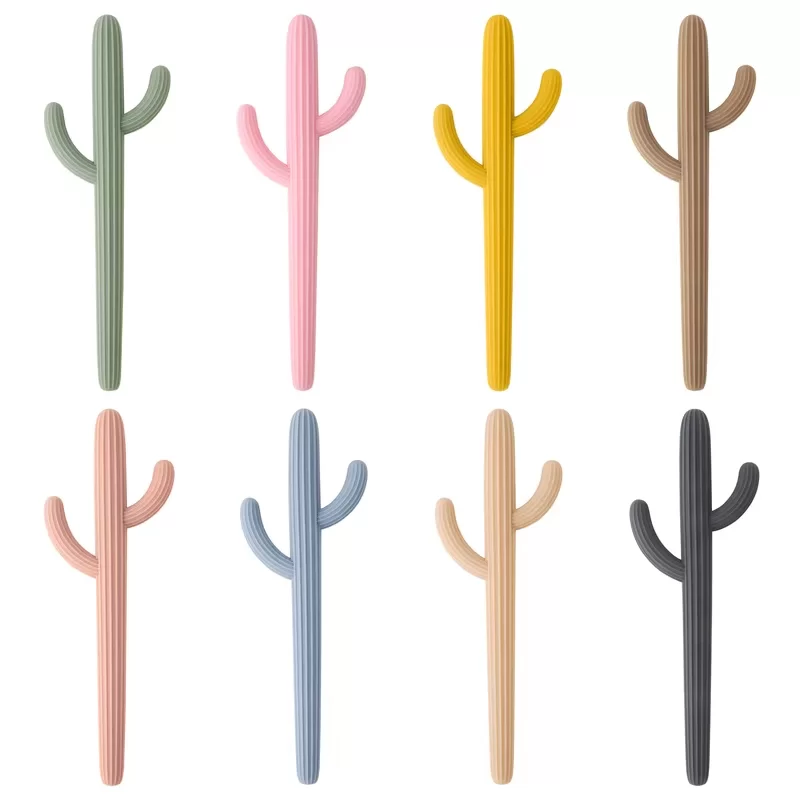
Current trends indicate a move toward "Sustainable Materials" and "Precision Health." In the medical sector, there is an increasing shift toward specialized tubing that can withstand rigorous sterilization cycles without degrading. Meanwhile, the consumer goods sector is seeing a rise in demand for sustainable alternatives, such as the Silicone Straw, reflecting a broader Peruvian societal shift away from single-use plastics. This is driving manufacturers to seek suppliers who can balance high-volume production with strict environmental and health safety standards.
The primary constraint in the Peruvian market remains the gap between technical design and final product delivery. Many engineers design sophisticated components that local vendors cannot execute with precision. However, this creates a significant opportunity for providers who can offer an end-to-end industrial chain—from R&D and custom molding to large-scale extrusion. The outlook remains positive, with the integration of smart wearables and precision structural components expected to further diversify the application of high-end silicone throughout the region.
From basic rubber seals to high-precision, certified medical and food-grade polymers.
The industry has evolved from "non-toxic" to "biocompatible." Modern silicone tubing now undergoes rigorous testing to ensure no adverse reactions when in contact with human tissue, a critical requirement for Peru's evolving healthcare infrastructure.
As wearables and precision electronics shrink, silicone components must maintain structural integrity at microscopic scales. This requires a transition from manual molding to high-precision liquid injection molding (LIM) technology.
Quality control has moved from post-production sampling to real-time sensor monitoring during extrusion, ensuring that every meter of tubing meets the exact specified wall thickness and diameter.
Key drivers shaping the next generation of silicone application solutions.
Integration of silicone with other elastomers to create "hybrid" materials that combine the thermal resistance of silicone with the mechanical toughness of traditional rubber.
Development of recyclable silicone processes to reduce industrial waste, aligning with the global shift toward sustainable manufacturing and carbon neutrality goals.
Embedding sensors or conductive elements within silicone tubes to allow for real-time flow monitoring or pressure sensing in medical and industrial pipelines.
Implementation of clean-room extrusion environments to eliminate particulate contamination for the most sensitive semiconductor and surgical applications.
The trajectory of the silicone industry is moving toward an era of "Functional Customization." Rather than providing generic tubes, the focus is shifting toward tailoring the material properties—such as hardness, permeability, and conductivity—to the specific operational needs of the end-user. In Peru, this means moving beyond simple imports to collaborative engineering where the material is designed specifically for the local climate and industrial stressors.
Furthermore, the integration of Industry 4.0 within rubber manufacturing is drastically reducing the "design-to-delivery" cycle. Through the use of digital twin modeling and automated extrusion parameters, manufacturers can now guarantee a level of consistency that was previously impossible. This technological leap allows for the rapid deployment of complex components like custom-profiled silicone door strips for high-efficiency architecture and specialized medical tubing for robotic surgery.
Real-world implementation of high-performance rubber components across diverse sectors.
In high-standard laboratories in Lima, the transport of sensitive reagents requires tubing that is completely inert and autoclavable. By implementing Medical-Grade Silicone Tubes, these facilities avoid chemical contamination and ensure that fluid transfer remains sterile, reducing the risk of batch spoilage in critical drug formulation processes.
Peru's agri-export industry requires processing lines that meet strict international health standards. Using Food-Grade Silicone Tubes for liquid nutrient or flavor delivery prevents leaching and ensures that the final product remains compliant with FDA and EU regulations, facilitating smoother customs clearance for Peruvian exports.
Cold storage facilities in coastal Peru face high humidity and temperature gradients. Installing high-durability Silicone Door Strips provides a superior thermal seal compared to PVC. This prevents energy loss from air leaks and protects frozen goods from condensation, directly reducing operational energy costs.
With the rise of eco-conscious consumption in urban Peruvian centers, cafes and retailers are replacing plastic with the Silicone Straw. These components must be food-safe, durable, and aesthetically appealing, leveraging liquid silicone rubber (LSR) molding to achieve a seamless, hygienic finish.
Mining equipment manufacturers in the Andes require seals that can withstand extreme vibrations and temperature swings. Custom Extruded Silicone Tubes, reinforced for high-pressure environments, provide the necessary elasticity to prevent fluid leaks in hydraulic systems, extending the maintenance intervals of heavy machinery.
Illustrative deployment scenarios reflecting the impact of high-precision silicone solutions.
For a large-scale consumer electronics partner, the requirement was a precision silicone gasket with zero-defect tolerance. By utilizing automated injection molding and rigorous ISO9001 quality checks, we delivered components that perfectly integrated with the device housing, ensuring a water-resistant seal for millions of units worldwide.
A global hygiene brand required customized silicone grips for dental products. The challenge was achieving a specific tactile softness while maintaining long-term durability. Through material compounding and precision molding, we provided a solution that met both the ergonomic and durability standards of the brand.
In a precision medical application, a client needed ultra-thin wall tubing with strict biocompatibility. By leveraging our ISO13485 certified clean-room environment and high-precision extrusion lines, we ensured a consistent inner diameter that allowed for precise fluid dosing in surgical equipment.
Nearly three decades of leadership in the high-end silicone and rubber products industry.
Established with a vision to specialize in high-quality rubber products, Guangyufeng began its journey by focusing on core material science and precision manufacturing.
The company expanded its footprint to four major production bases in Shenzhen, Huizhou, Dongguan, and Bangkok, totaling over 170,000 square meters of advanced facility space.
Achieved a comprehensive suite of international certifications, including FDA, ISO9001, ISO13485, and IATF16949, enabling strategic partnerships with brands like Samsung, Sony, and Huawei.
Now employing over 1,000 professionals, Guangyufeng is a world-leading provider of silicone solutions, integrating R&D, design, and mass manufacturing into a single seamless chain.


Technical insights regarding silicone selection and procurement for the Peruvian market.
Food-grade silicone is certified for contact with food and beverages, meeting FDA or ISO22000 standards to ensure no harmful substances leach into consumables. Medical-grade silicone (ISO13485) goes further, requiring higher purity levels and biocompatibility testing to ensure it does not cause adverse reactions when used in surgical or diagnostic devices. For Peruvian pharmaceutical applications, medical-grade is mandatory, while food-processing plants typically utilize food-grade extrusions.
We employ a combination of precision-engineered dies and closed-loop temperature and speed control on our 12 extrusion lines. By monitoring the material flow in real-time and using advanced curing ovens, we prevent the shrinkage and warping that often occur during the vulcanization process. This ensures that the inner and outer diameters remain consistent across the entire length of the tube, critical for precision structural components.
Yes, our independent mold department is capable of developing 30 to 100 sets of molds per month. We can take your technical drawings (CAD/PDF) and create a custom profile that fits your exact door or window frame specifications. This allows Peruvian facility managers to optimize their thermal sealing and noise insulation by using profiles specifically designed for their architectural requirements rather than relying on generic sizes.
Depending on the application, you should verify FDA compliance for food contact, ISO13485 for medical devices, and IATF16949 for automotive components. General quality management is covered by ISO9001. Guangyufeng provides a complete documentation package for all these certifications, which is essential for passing Peruvian customs inspections and meeting the regulatory requirements of DIGEMID or other local health authorities.
Silicone is naturally superior to PVC or EPDM in temperature resistance. It remains flexible in the freezing temperatures of the Andean highlands and resists degradation under the intense UV radiation and humidity of the coastal regions. Our specialized cross-linking process further enhances this stability, ensuring that products like door strips and industrial tubes do not crack or lose their elasticity over time, regardless of the local environment.
Lead times depend on whether a custom mold is required. For standard profiles, we can ship rapidly from our global production bases. For custom designs, the mold development typically takes 1-2 weeks, followed by production and shipping. Because we have four major bases, we can optimize the production site to ensure the fastest possible delivery to Peruvian ports, reducing the risks associated with long-distance supply chains.
Whether you are developing a new medical device, upgrading industrial sealing, or sourcing sustainable food-grade components, Guangyufeng Group provides the technical precision and certified quality your project demands. Our engineers are ready to help Peruvian enterprises transition from generic rubber parts to high-performance, tailored silicone solutions that reduce maintenance and ensure regulatory compliance.
Discuss Your Requirements

