

Manufacturing leaders in Germany face complex trade-offs between strict regulatory compliance and supply chain agility.
Maintaining strict adherence to EU medical and food-grade standards is often hindered by inconsistent material certifications from suppliers, leading to costly audit failures and production delays in the German market.
In precision engineering, minor variances in wall thickness or diameter of extruded tubes can cause leakage or assembly failure, creating systemic inefficiencies in high-precision automated German assembly lines.
The long lead times for custom mold development often stall product innovation, preventing German OEMs from responding quickly to market shifts or urgent customized application requirements.
Exposure to extreme industrial chemicals or temperature fluctuations in manufacturing environments often leads to premature silicone hardening or cracking, increasing maintenance costs and downtime.
Reliance on fragmented sourcing leads to inconsistent batch quality and unpredictable delivery schedules, which conflicts with the "Just-in-Time" production philosophy prevalent in German automotive and medical sectors.
Standard Silicone Door Strip products often fail to maintain long-term compression sets, resulting in energy loss and noise pollution in high-end commercial infrastructure.
We bridge the gap between raw material science and industrial application through a complete vertical production chain.
By utilizing FDA, ISO13485, and IATF16949 certified processes, we ensure every batch of Medical-Grade Silicone Tube meets the exact biocompatibility and safety requirements demanded by EU regulators.
Our 12 advanced extrusion lines utilize closed-loop monitoring to maintain ultra-tight tolerances on wall thickness, ensuring seamless fitment in precision structural components and fluid systems.
With an independent mold department capable of developing 30–100 sets monthly, we drastically reduce the time from CAD design to physical prototype for customized rubber components.
We optimize silicone cross-linking density to enhance thermal stability and chemical resistance, ensuring components withstand harsh operating conditions without losing elasticity or structural integrity.
Operating four bases across China and Thailand with over 170,000 sqm allows us to absorb demand spikes and maintain a stable, redundant supply chain for European strategic partners.
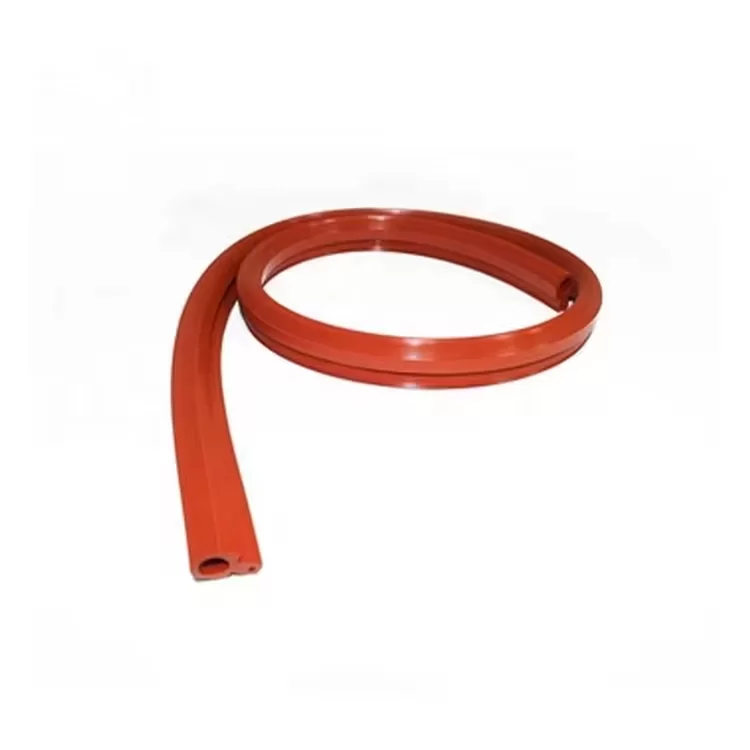
Engineered with optimized shore hardness and geometry, our sealing solutions provide superior recovery rates, effectively eliminating air and water leakage in architectural applications.
Scale and precision that support the world's most demanding brands.
Analyzing the intersection of engineering precision and material sustainability in Central Europe.
Germany represents one of the most sophisticated markets for rubber and plastic products globally. The industrial ecosystem is characterized by a high concentration of medical device manufacturers, automotive OEMs, and precision machinery builders. In this environment, silicone is preferred over traditional elastomers due to its exceptional thermal stability and biocompatibility. However, the German market is not just about material performance; it is governed by strict adherence to REACH and RoHS regulations, requiring suppliers to provide exhaustive documentation and traceable material origins to ensure safe integration into complex systems.
Current trends indicate a strong shift toward "Medical-Grade" and "Food-Grade" certifications across non-medical sectors. For instance, the demand for Food-Grade Silicone Tube is expanding beyond food processing into high-end consumer appliances and laboratory equipment. This is driven by an increasing consumer focus on health and the elimination of phthalates and BPA. Additionally, there is a visible trend toward automation in assembly, which places unprecedented pressure on the dimensional consistency of extruded components to ensure they can be handled by robotic systems without manual adjustment.
The outlook for the German silicone market is shaped by the dual pressures of sustainability and digitization. Companies are seeking materials that offer longer lifecycles to reduce waste, prompting a move toward higher-grade platinum-cure silicones. While the market faces constraints from rising energy costs within the EU, the opportunity lies in providing "Total Application Solutions"—where the supplier doesn't just sell a tube, but optimizes the entire seal or fluid path for efficiency. Success in this region requires a partner who can balance large-scale production capacity with the flexibility to handle highly technical, low-volume customized orders.
From basic gaskets to bio-compatible precision conduits.
The industry is moving toward co-extrusion, combining silicone with other polymers to create components that possess both the flexibility of rubber and the structural rigidity of plastics, optimizing performance for complex fluid paths.
There is a significant push toward reducing scrap rates in extrusion. Advanced software is now used to predict material flow, minimizing waste and aligning with the circular economy goals of European manufacturers.
Silicone is evolving from a passive conduit to an active interface. We see a rise in the development of specialized tubes for wearable sensors, requiring specific Shore hardness and transparency levels.
Analyzing the drivers of the next generation of rubber products.
The integration of conductive elements within Medical-Grade Silicone Tube allows for real-time flow sensing and pressure monitoring, transforming passive tubes into active diagnostic tools.
Moving beyond sampling to 100% automated optical inspection (AOI) in extrusion lines. This ensures that every millimeter of tubing is free from inclusions or voids, critical for high-risk medical applications.
Development of more efficient regrind processes for silicone waste without compromising the physical properties of the final product, aligning with the EU Green Deal's waste reduction targets.
Shift toward extremely complex internal profiles in extruded tubes to optimize fluid dynamics or provide integrated reinforcement, reducing the need for secondary assembly components.
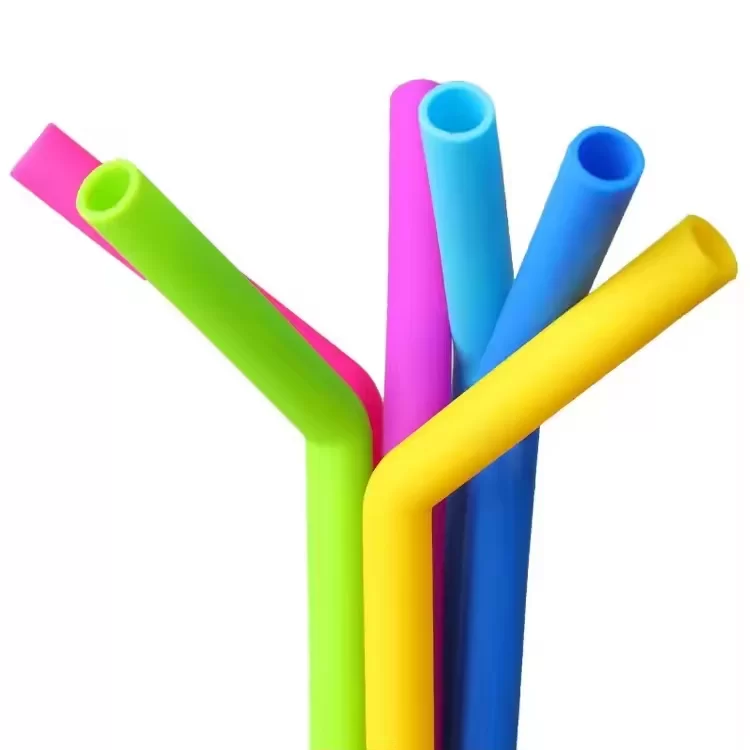
The convergence of these trends suggests that the future of silicone manufacturing is no longer about commodity production but about high-value engineering. For the German market, this means a transition toward "intelligent" components. When a Silicone Straw is designed not just for fluid transport but for specific flow-rate control in a medical device, the value proposition shifts from cost-per-meter to performance-per-application. This requires a deep integration between the material scientist and the end-product engineer.
Furthermore, the regional emphasis on "Industrie 4.0" is pushing rubber manufacturers to adopt digital twins for their extrusion processes. By simulating the cooling and curing phases of a silicone tube before the first physical run, manufacturers can eliminate the traditional "trial and error" phase. This not only reduces material waste but also ensures that the final product perfectly matches the digital specifications required by German automotive and aerospace clients, ensuring seamless integration into highly automated supply chains.
Real-world implementations across diverse high-tech sectors.
In the dense medical clusters of Southern Germany, manufacturers of dialysis machines require high-purity Medical-Grade Silicone Tube. The local condition involves strict biocompatibility audits. By implementing ultra-clean extrusion and ISO13485 certified packaging, we solve the problem of particulate contamination, ensuring that fluid paths remain sterile and safe for patient use, reducing the risk of systemic inflammation.
German automotive OEMs face the challenge of cabin noise and thermal leakage. We provide specialized extrusion profiles for HVAC systems. Given the extreme temperature swings of Central European winters and summers, the technology focuses on high-recovery silicone formulations. This prevents the seals from permanent deformation, maintaining a tight acoustic barrier and improving energy efficiency in electric vehicle climate control.
Industrial food producers in the Ruhr region require tubing that can withstand caustic cleaning agents. By deploying Food-Grade Silicone Tube with optimized cross-linking, we eliminate the problem of material leaching and chemical degradation. This ensures compliance with EFSA standards and prevents product contamination, directly increasing the operational lifespan of the processing machinery.
Modern office design in Berlin emphasizes acoustic comfort and sustainable materials. We provide custom Silicone Door Strip solutions for glass partitions. The challenge is achieving a seamless aesthetic without compromising the seal. Our precision extrusion ensures perfectly consistent profiles that absorb sound vibrations, creating a quieter workspace while maintaining a minimalist architectural look.
For health-tech startups developing wearable monitors, the skin-contact interface is critical. We provide micro-extruded silicone components. The local problem is the balance between softness (low Shore hardness) and tear resistance. By utilizing liquid injection molding and precise extrusion, we create components that are hypoallergenic and durable, ensuring long-term wearer comfort and device reliability.
How our capabilities translate into operational success for our global partners.
Integrating custom extruded silicone components into high-precision consumer electronics requires a partner who understands the intersection of aesthetics and engineering. The ability to rapidly iterate molds and provide consistent tolerances has been key to maintaining a fast product launch cycle without compromising on the tactile quality of the final device.
In the medical sector, the cost of material failure is unacceptable. Sourcing certified silicone tubing that meets both FDA and ISO13485 standards from a single, vertically integrated supplier simplifies our quality audit process and ensures that every batch used in our fluid management systems is identical in performance.
Scaling production for global household brands requires immense capacity combined with strict quality control. Having access to multiple production bases and a vast array of hydraulic and injection molding equipment allows for a stability in delivery that is rare in the customized rubber industry.
A journey from a specialized workshop to a world-leading silicone application provider.
Established as a dedicated rubber products manufacturer, focusing on high-end silicone applications and building the core technical foundation for precision molding.
Expanded production capabilities to include four major bases in Shenzhen, Huizhou, Dongguan, and Bangkok, covering over 170,000 square meters to serve global demand.
Achieved a comprehensive suite of international certifications, including FDA, ISO13485, IATF16949, and ISO9001, enabling strategic partnerships with world-renowned brands.
Established long-term strategic relationships with industry leaders such as Samsung, Huawei, Sony, Nintendo, Foxconn, and Colgate, promoting continuous material innovation.
Deployed a massive fleet of 138 hydraulic presses and 50 liquid injection molding machines, supported by a high-capacity internal mold development center.
Driving the industry toward sustainable development and technological breakthroughs in high-end silicone application solutions for global customers.

Clear answers to the most common technical and procurement questions.
The primary difference lies in the certification standards and purity levels. Food-grade silicone is designed to be safe for contact with food and complies with FDA or LFGB standards, focusing on non-toxicity. Medical-grade silicone, such as our ISO13485 certified tubing, meets much stricter biocompatibility requirements (like USP Class VI), ensuring it does not elicit a toxic or immunogenic response when used in surgical or implanted applications. For German industrial users, selecting the correct grade depends entirely on the final application's risk classification.
We employ closed-loop extrusion control systems that monitor the material flow and temperature in real-time. This is coupled with laser micrometer measurement tools that check wall thickness and diameter at multiple points during the extrusion process. Any deviation triggers an automatic adjustment of the line speed or pressure. For our European clients, we provide detailed dimensional inspection reports for every batch, ensuring that the components integrate perfectly into automated assembly lines without manual shimming.
Yes, we have a dedicated internal mold department with a monthly capacity of 30–100 sets. We can translate your CAD drawings into high-precision extrusion dies. Whether you need a complex hollow profile for a Silicone Door Strip or a reinforced tube for automotive HVAC, we handle the entire process from material selection and prototype testing to mass production. We recommend starting with a prototype phase to validate the compression set and seal integrity under your specific operational conditions.
Typically, the mold development phase takes between 1 to 3 weeks, depending on the complexity of the profile. Once the prototype is approved, mass production timelines vary by volume but are optimized through our four production bases. By integrating the mold shop within our own facility, we eliminate the communication lag and shipping times associated with external toolmakers, allowing us to respond significantly faster than traditional sourcing models. We provide transparent milestone tracking from design to delivery.
Our silicone products are engineered to maintain flexibility and structural integrity across a wide temperature range, typically from -60°C to +230°C. We optimize the platinum-cure process to prevent hardening or cracking under prolonged thermal stress. For extreme environments, we can adjust the polymer formulation to enhance chemical resistance against specific industrial solvents or oils. We recommend providing the specific chemical exposure and temperature cycles of your application so we can select the optimal material grade.
Depending on the industry, you should prioritize ISO9001 for general quality, IATF16949 for automotive, and ISO13485 for medical devices. For material safety, FDA and LFGB are critical for food contact, while REACH and RoHS compliance is mandatory for almost all products entering the EU to ensure the absence of hazardous substances. Guangyufeng Group holds all these certifications, providing a comprehensive compliance package that simplifies the regulatory burden for German importers and manufacturers.
Whether you are developing a next-generation medical device in Munich or optimizing industrial sealing in Hamburg, our engineering team is ready to help you solve complex material challenges. We provide the technical precision, regulatory certifications, and production scale required to succeed in the competitive German market. Contact us to discuss your specific tolerances and material requirements.
Discuss Your Requirements

