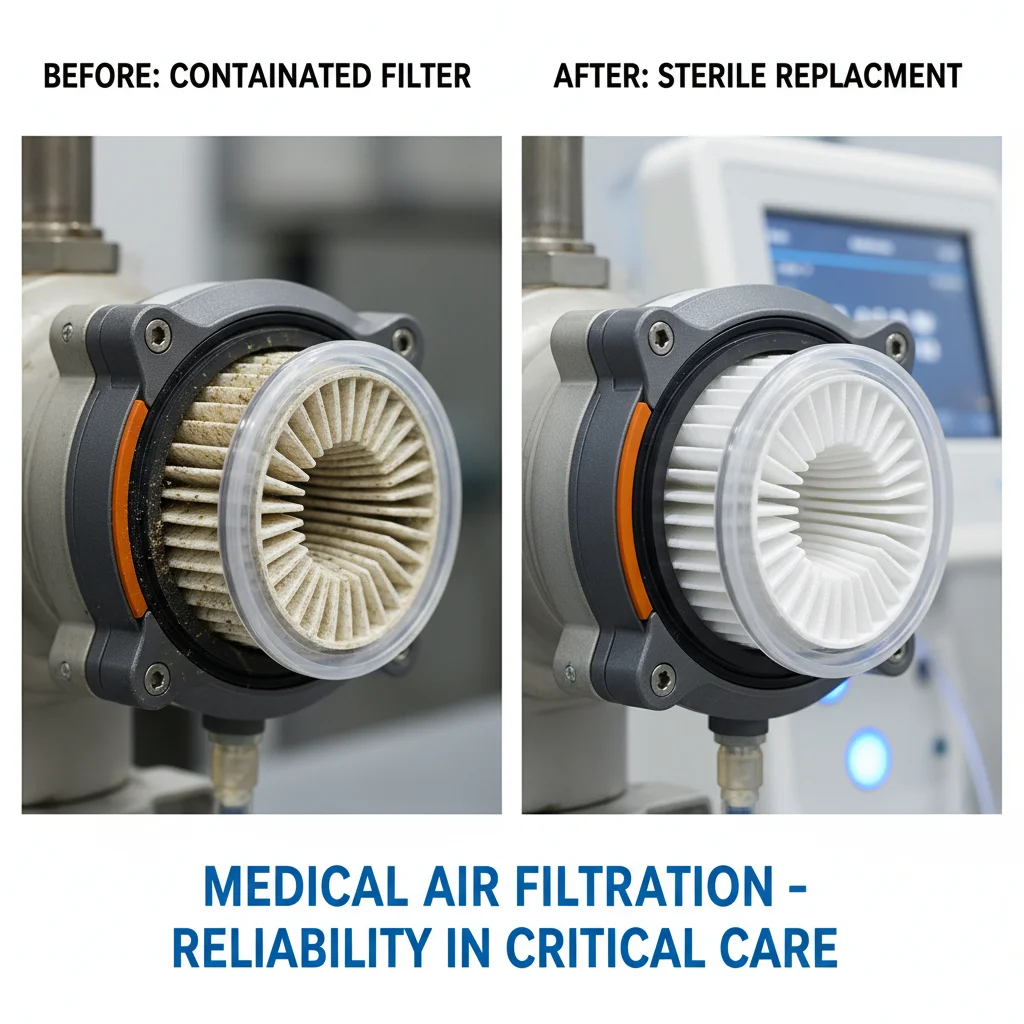
The global industrial landscape is witnessing a significant shift toward high-precision components that ensure the longevity and safety of energy storage systems. Central to this evolution is the battery air filter, a critical element designed to regulate airflow and prevent contaminants from compromising sensitive internal electronics. By maintaining a sterile environment, these filtration systems prevent premature degradation and ensure that high-capacity batteries operate at peak efficiency across diverse climatic conditions.
From a technical perspective, the implementation of a high-grade battery air filter addresses the persistent challenge of particulate infiltration. In heavy-duty industrial environments, dust, moisture, and chemical pollutants can lead to short circuits or thermal runaway if not properly managed. Consequently, the demand for advanced filtration materials has surged, pushing manufacturers to develop solutions that balance high air permeability with rigorous particulate capture capabilities to safeguard expensive infrastructure.
Understanding the nuances of these systems is essential for engineers and procurement specialists aiming to minimize operational downtime. By integrating a high-performance battery air filter into the design phase, companies can significantly extend the lifecycle of their power units. This proactive approach to maintenance not only reduces long-term costs but also aligns with global sustainability goals by reducing electronic waste through enhanced product durability.

Global Relevance of Battery Air Filter Systems
The global transition toward renewable energy and electric mobility has placed unprecedented pressure on energy storage reliability. As ISO standards for battery safety become more stringent, the role of the battery air filter has transitioned from a secondary accessory to a primary safety requirement. In regions with high pollution levels or extreme humidity, such as rapidly industrializing hubs in Asia and South America, these filters are the first line of defense against environmental failure.
Moreover, the scale of deployment for large-scale BESS (Battery Energy Storage Systems) means that even a minor failure in filtration can lead to catastrophic losses. By analyzing global failure data, it becomes evident that a significant percentage of battery malfunctions are linked to contaminated airflow. This has led to a global standardization of filtration protocols to ensure that air exchange occurs without introducing hazardous particles.
Defining the Technical Scope of Battery Air Filtration
In simple terms, a battery air filter is a specialized barrier designed to permit the passage of air for cooling and pressure equalization while blocking dust, moisture, and chemical aerosols. Unlike standard HVAC filters, these components must handle specific chemical environments and maintain a precise pressure drop to ensure that the battery's thermal management system is not obstructed.
The connection to modern industry is profound, as the "smart" nature of today's batteries requires an ultra-clean environment to prevent dendritic growth and internal corrosion. In humanitarian contexts, such as deploying portable power grids in disaster zones, these filters ensure that equipment remains operational despite the presence of ash, sand, or debris, thereby maintaining critical communication and medical lines.
Technically, the scope of these filters encompasses everything from hydrophobic membranes that repel water to electrostatic media that capture sub-micron particles. This intersection of material science and electrical engineering ensures that the battery remains a closed system from a contaminant perspective, while remaining an open system for thermal regulation.
Core Components for Maximum Durability
One of the primary factors in the design of a battery air filter is material durability. High-grade polymers and synthetic fibers are employed to resist chemical degradation from electrolyte leakage or external acidic rain. This ensures that the filter does not break down over time, which would otherwise allow a surge of contaminants to enter the battery housing.
Scalability is equally critical, as the battery air filter must be adaptable to various sizes, from small 3C product batteries to massive industrial energy banks. This requires a modular approach to filtration where the surface area can be increased to maintain a low pressure drop while increasing the volume of air being filtered, preventing the battery from overheating.
Finally, cost efficiency is achieved through the optimization of the filter's lifespan. By utilizing multi-layered filtration—where a coarse pre-filter protects a high-efficiency fine filter—the overall replacement cycle is extended. This strategic layering reduces the total cost of ownership for the operator while maintaining a rigorous standard of air purity.
Industrial Applications and Use Cases
In real-world contexts, the application of battery air filter technology varies by environment. In remote industrial zones, such as mining operations in Australia or the Atacama Desert, filters are reinforced with heavy-duty pre-screens to handle coarse sand. These applications prevent the abrasive nature of desert dust from eroding the internal components of the battery cooling fans.
Similarly, in post-disaster relief operations, where power generators and battery packs are exposed to smoke and ash, specialized filtration ensures that critical equipment doesn't fail. Organizations like the Red Cross or UN depend on this reliability to keep field hospitals operational, proving that the right filtration system can be a matter of life and death in emergency logistics.
Battery Air Filter Efficiency by Environment
Long-Term Value and Operational Reliability
The tangible benefits of investing in a high-quality battery air filter extend beyond simple maintenance. By reducing the frequency of internal cleaning and preventing the accumulation of conductive dust, companies can see a marked decrease in unplanned downtime. This reliability builds trust with end-users, especially in the automotive and aerospace sectors where system failure is not an option.
From a sustainability perspective, the long-term value lies in the extension of the battery's usable life. When thermal management is optimized through clean airflow, the chemical degradation of the cells is slowed. This reduces the demand for raw materials like lithium and cobalt by delaying the need for battery replacement, creating a positive ripple effect across the entire green energy supply chain.
Future Innovations in Filtration Materials
Upcoming trends in battery air filter technology are heavily focused on "smart" materials. We are seeing the emergence of sensors integrated directly into the filter medium that can alert operators in real-time when the filter is saturated. This shift from scheduled maintenance to predictive maintenance ensures that the battery is never at risk due to a clogged filter.
Furthermore, the integration of nanotechnology is allowing for the creation of membranes that are incredibly thin—reducing air resistance—yet capable of blocking particles at the molecular level. These innovations are being paired with biodegradable polymers, ensuring that the filters themselves do not contribute to the environmental burden at the end of their lifecycle.
Digital transformation is also playing a role, as AI-driven thermal models now dictate the exact porosity required for a battery air filter based on the expected geographic deployment. This hyper-customization ensures that every unit has the perfect balance of airflow and protection, maximizing the energy density and safety of the system.
Overcoming Modern Implementation Challenges
Despite the benefits, a common limitation in current practice is the trade-off between filtration efficiency and airflow. A filter that is too restrictive can lead to overheating, while one that is too porous allows contaminants in. Expert insights suggest a hybrid approach: using a variable-speed fan system that adjusts based on the pressure differential across the battery air filter.
Another challenge is the cost of high-efficiency materials. To overcome this, manufacturers are moving toward a "cartridge" system where only the inner high-efficiency layer is replaced, while the outer structural frame is reused. This reduces waste and lowers the operational cost for the end-user without sacrificing the integrity of the filtration.
Finally, standardization across different battery brands remains an obstacle. The industry is currently moving toward a universal mounting standard for filtration components, which would allow for easier upgrades and replacements. By adopting these open standards, the global community can accelerate the adoption of safer, more efficient energy storage solutions.
Analysis of Battery Air Filter Implementation Strategies
| Strategy Type |
Primary Material |
Filtration Rating |
Maintenance Cycle |
| Passive HEPA |
Glass Fiber |
9.5 |
6 Months |
| Hydrophobic Nano |
PTFE Membrane |
8.8 |
12 Months |
| Electrostatic |
Polypropylene |
7.2 |
4 Months |
| Hybrid Layered |
Composite Fiber |
9.0 |
9 Months |
| Chemical-Resistant |
Activated Carbon |
8.5 |
6 Months |
| Smart-Sensor Integrated |
Poly-Synthetic |
9.2 |
On-Demand |
FAQS
Replacement frequency depends on the environment. In clean, controlled indoor settings, a filter may last 12 to 24 months. However, in industrial or dusty outdoor environments, we recommend inspection every 3 months and replacement every 6 months to prevent airflow restriction and potential battery overheating.
Yes, a severely clogged filter restricts the flow of cooling air, which can lead to an increase in internal operating temperatures. Over time, this thermal stress accelerates the degradation of battery cells and, in extreme cases, can trigger thermal runaway or system shutdown to prevent fire.
While standard filters focus on general air quality, a battery air filter is engineered for specific chemical resistance, precise pressure drop calculations, and hydrophobic properties. They are designed to protect sensitive electronics from microscopic conductive dust and moisture, which are not typically the primary concerns of general HVAC filters.
Yes, the industry is shifting toward recyclable synthetic polymers and biodegradable fibers. Many new designs also use a modular cartridge system, allowing users to replace only the filter media while keeping the plastic housing, which significantly reduces the amount of plastic waste entering landfills.
The most obvious sign is a visible accumulation of dust on the exterior. Technically, you can monitor the battery's operating temperature; if it runs hotter than usual despite the cooling system being active, it often indicates a restricted air filter. Smart filters with integrated pressure sensors can also provide digital alerts.
High-quality filters utilize hydrophobic membranes that allow air molecules to pass through while blocking liquid water and fine mist. This is critical for batteries deployed in coastal or humid regions, as it prevents internal corrosion and moisture-induced short circuits.
Conclusion
In summary, the battery air filter serves as a fundamental pillar of energy storage safety and efficiency. By integrating advanced material science with precise engineering, these components protect critical infrastructure from environmental hazards, extend the operational life of expensive battery arrays, and ensure that the global transition to green energy is supported by reliable technology.
Looking forward, the integration of smart sensing and sustainable materials will further optimize how we manage airflow in energy systems. We encourage engineers and operators to prioritize high-specification filtration to safeguard their investments and contribute to a more sustainable industrial future. Visit our website for more professional solutions: www.gyfsilicone.com